The Number Ones by Tom Breihan
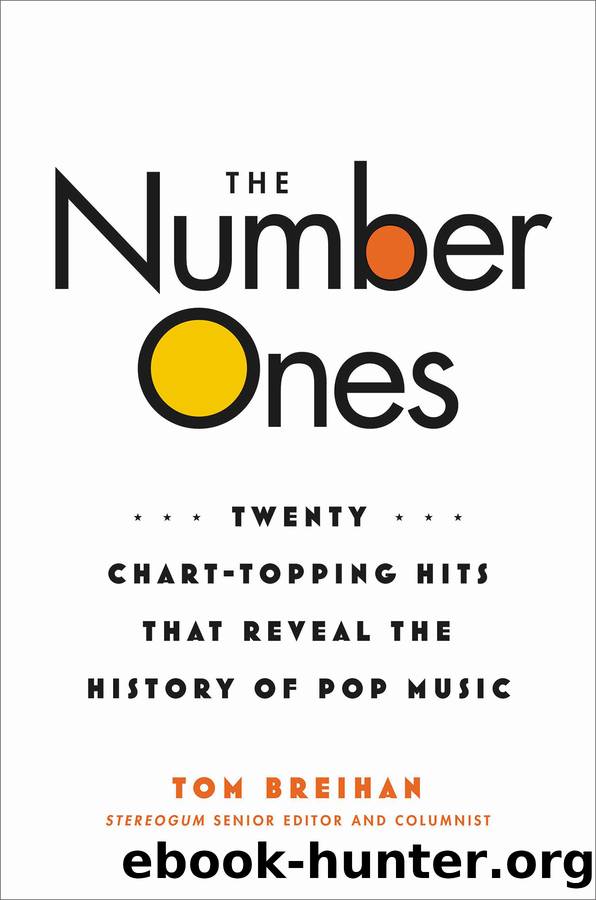
Author:Tom Breihan [Breihan, Tom]
Language: eng
Format: epub
Publisher: Hachette Books
Published: 2022-11-15T00:00:00+00:00
CHAPTER 12
Bon JoviââYou Give Love a Bad Nameâ
Released July 23, 1986
Hit #1 November 29, 1986
One-week reign
EVER SINCE THE LATE SIXTIES, HARD-ROCK BANDS HAVE BEEN using distortion-drenched guitar riffs and strangulated vocals to pack stadiums and sell millions of records. Until the mideighties, though, those bands only rarely made a dent in the pop charts. Heavy metal pioneers like Vanilla Fudge, Deep Purple, and Led Zeppelin all had top-10 hits in the late sixties and early seventies, when their swampy, bluesy riff-rock wasnât terribly far removed from the psychedelic mainstream. Vanilla Fudge, for instance, got to #6 with their 1968 cover of the Supremesâ âYou Keep Me Hanginâ On,â a twist on a song that wouldâve been familiar to radio listeners. But none of those groups ever reached #1. Led Zeppelin were one of the most popular bands in the world for a solid decade, but they only ever hit the top 10 once, when their early classic âWhole Lotta Loveâ climbed as high as #4 in 1970.
As heavy metal developed into its own genre, it moved away from the Hot 100. Acts like Black Sabbath and Ted Nugent could draw tens of thousands of fans in any American city, but they barely ever charted. The problem was the radio. Top-40 radio programmers, shooting for the widest-possible audiences, worried that power chords would chase away listeners. There was a huge audience for metal, but that audience, at least according to conventional wisdom, was overwhelmingly male and working class. Even on the fast-exploding album-oriented rock format, programmers leaned on relatively anonymous and inoffensive studio-rock acts like Boston and Kansas rather than heavier fare like Thin Lizzy or Blue Oyster Cult, neither of whom ever reached the top 10.
A few hard-rock singles reached #1 in the seventies, but those success stories were outliers. Michiganâs Grand Funk Railroad were already stadium-conquering commercial behemoths by the time they cleaned up their sound, hired producer Todd Rundgren, and landed a couple of chart-toppers with the 1973 party anthem âWeâre an American Bandâ and with their 1974 cover of âThe Loco-Motion,â the âTwistâ-adjacent dance song that Carole King and Gerry Goffin had written for their babysitter a decade earlier. Canadian bands the Guess Who and Bachman-Turner Overdrive, neither of whom were ever especially heavy, made it to #1 with, respectively, 1970âs âAmerican Womanâ and 1974âs âYou Ainât Seen Nothing Yet,â two exceedingly catchy and horny tunes. In 1973, the Edgar Winter Group scored a freak chart-topper with their heavy blues-rock instrumental âFrankenstein.â These were the exceptions. Most of the seventies ragers that remain in classic-rock radio rotation today simply couldnât get airplay when they were new. Since Billboard uses radio plays, as well as sales, to tabulate the Hot 100, the hesher heroes of the world were at a distinct disadvantage.
Even the most commercial hard-rock bands of the seventies and early eighties couldnât crack the radio code. Aerosmith, shameless showmen who sold an Americanized version of Rolling Stones boogie-rock, had a couple of top-10 hits in their
Download
This site does not store any files on its server. We only index and link to content provided by other sites. Please contact the content providers to delete copyright contents if any and email us, we'll remove relevant links or contents immediately.
The Goal (Off-Campus #4) by Elle Kennedy(13681)
Kathy Andrews Collection by Kathy Andrews(11844)
Diary of a Player by Brad Paisley(7585)
Assassin’s Fate by Robin Hobb(6228)
What Does This Button Do? by Bruce Dickinson(6210)
Big Little Lies by Liane Moriarty(5808)
Altered Sensations by David Pantalony(5107)
Pale Blue Dot by Carl Sagan(5013)
Sticky Fingers by Joe Hagan(4205)
The Death of the Heart by Elizabeth Bowen(3626)
The Heroin Diaries by Nikki Sixx(3554)
Confessions of a Video Vixen by Karrine Steffans(3313)
Beneath These Shadows by Meghan March(3312)
How Music Works by David Byrne(3273)
The Help by Kathryn Stockett(3153)
Jam by Jam (epub)(3096)
Harry Potter 4 - Harry Potter and The Goblet of Fire by J.K.Rowling(3077)
Computational Linguistics and Intelligent Text Processing: 20th International Conference, CICLing 2019 La Rochelle, France, April 7â13, 2019 Revised Selected Papers, Part I by Alexander Gelbukh(2997)
Strange Fascination: David Bowie: The Definitive Story by David Buckley(2874)
